Plug Penumbra in once. From there we route every charge to the best processor for it. When one goes down, we fail over automatically. When a better rate opens up, we take it. You never touch the plumbing, and there's no new dashboard to adopt: Penumbra runs inside the CRM you already use.
* Any processor means any of the ones we’ve integrated with today: Stripe, Worldpay, Adyen, NMI, Square, and Circle, plus the bank and stablecoin rails behind them. Adding a new processor is a config change, not a rebuild.
Intelligent routing and automatic failover come standard.
Picking Stripe and only Stripe (or Worldpay, or Adyen) means your business depends on theirs. When they have a bad day, you have a bad day. Penumbra sits in front of all of them so you don’t.
If your one processor has an outage today, your business stops today. Penumbra fails over to a backup processor in real time. Your customers never see it.
Different processors price differently for different cards. Penumbra scores them per transaction and picks the one that costs you the least. Often pennies per swipe, always your money.
When a processor’s approval rate slips, Penumbra notices in real time and shifts traffic. You don’t lose sales waiting for a status page to update.
Four pieces. One engine. Every transaction goes through them before a processor ever sees it.
Picks the right processor per charge based on card type, amount, approval history, and live cost.
Your customer’s saved cards live with you, not with one processor. Switch providers without re-asking customers for their card.
Each charge is classified for the lowest-cost interchange tier. Level 2 and 3 data injected automatically. You pay less in fees.
Every transaction scored on dozens of signals before authorization. Approve, flag, or block, with the reasoning surfaced.
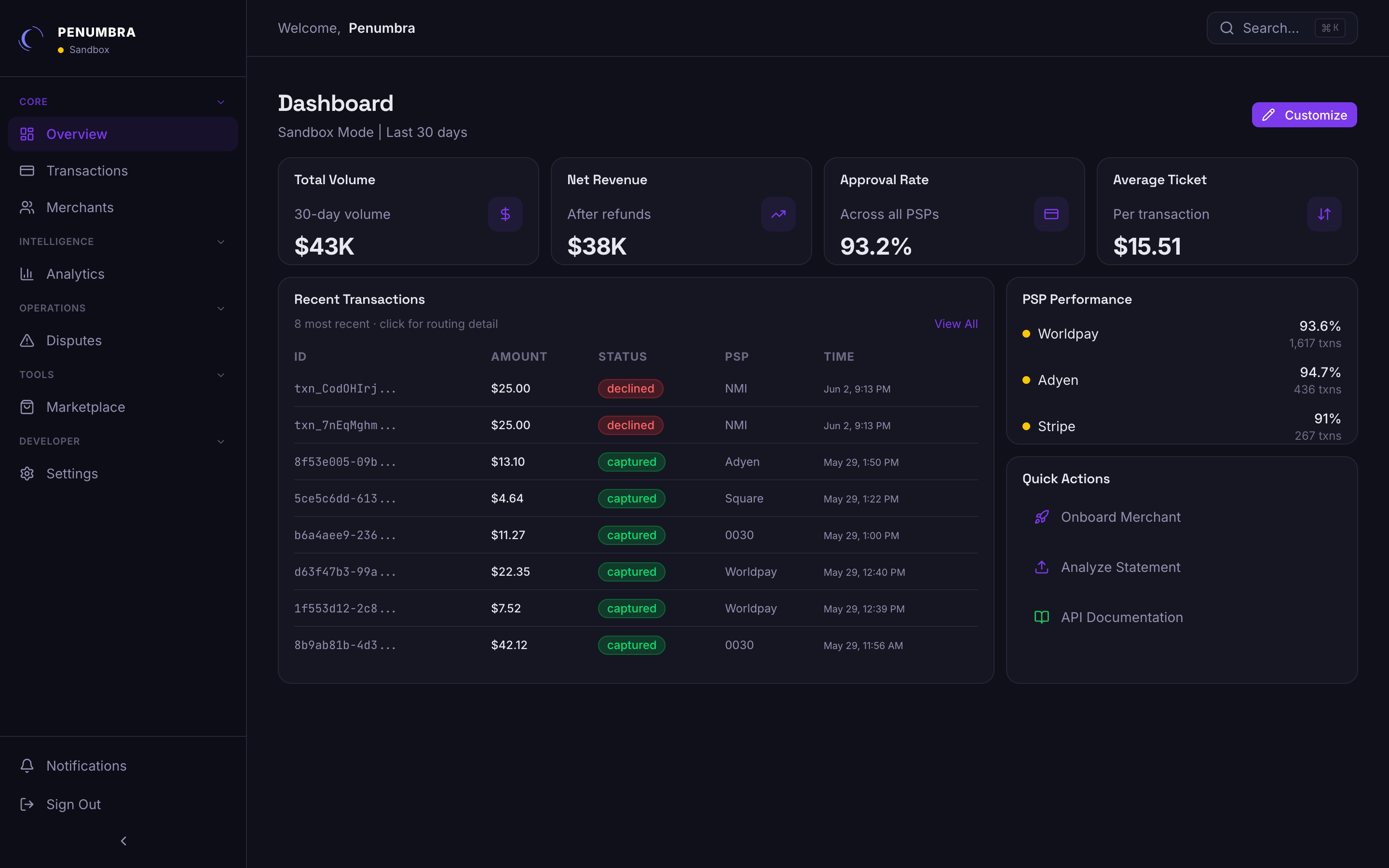
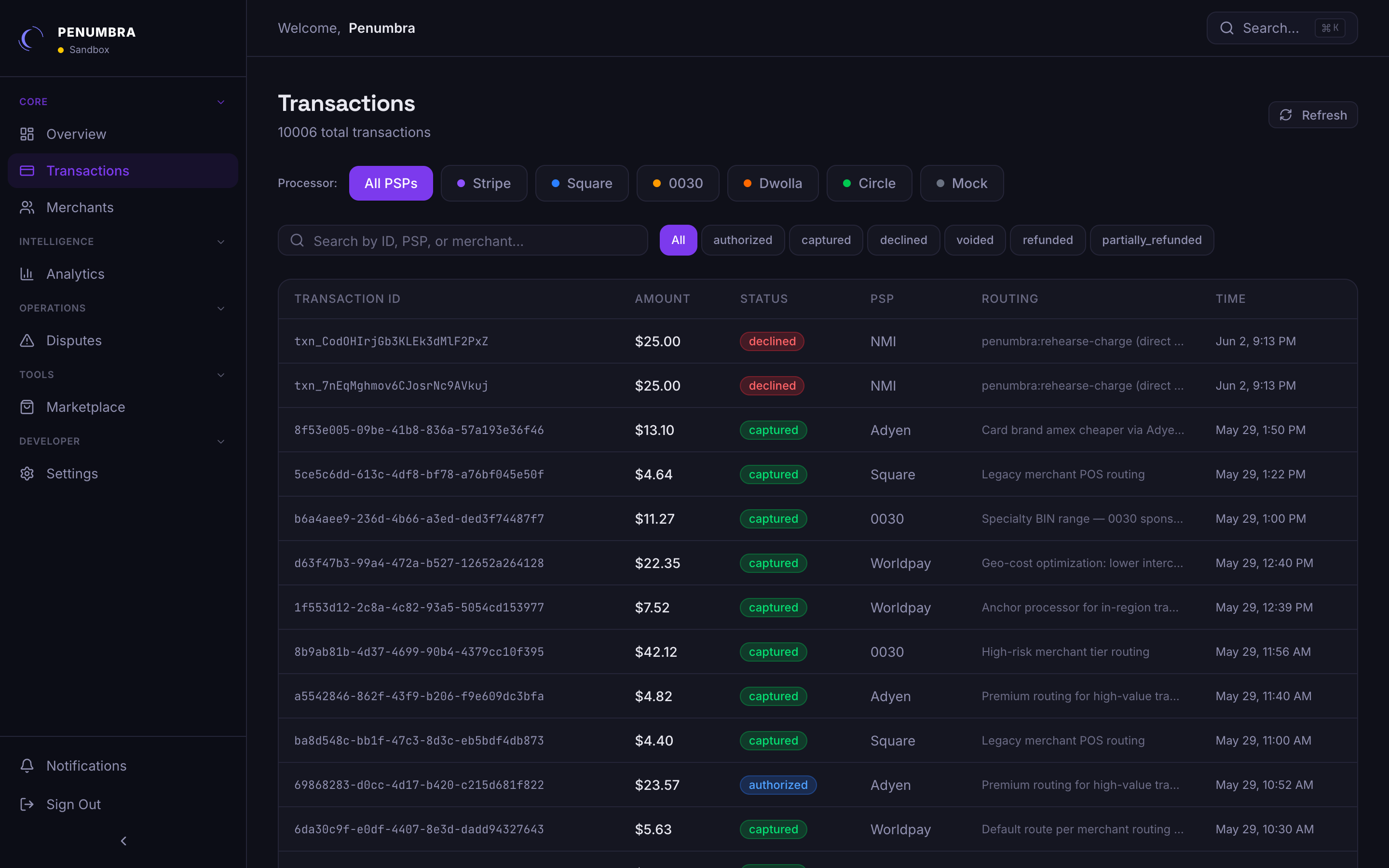
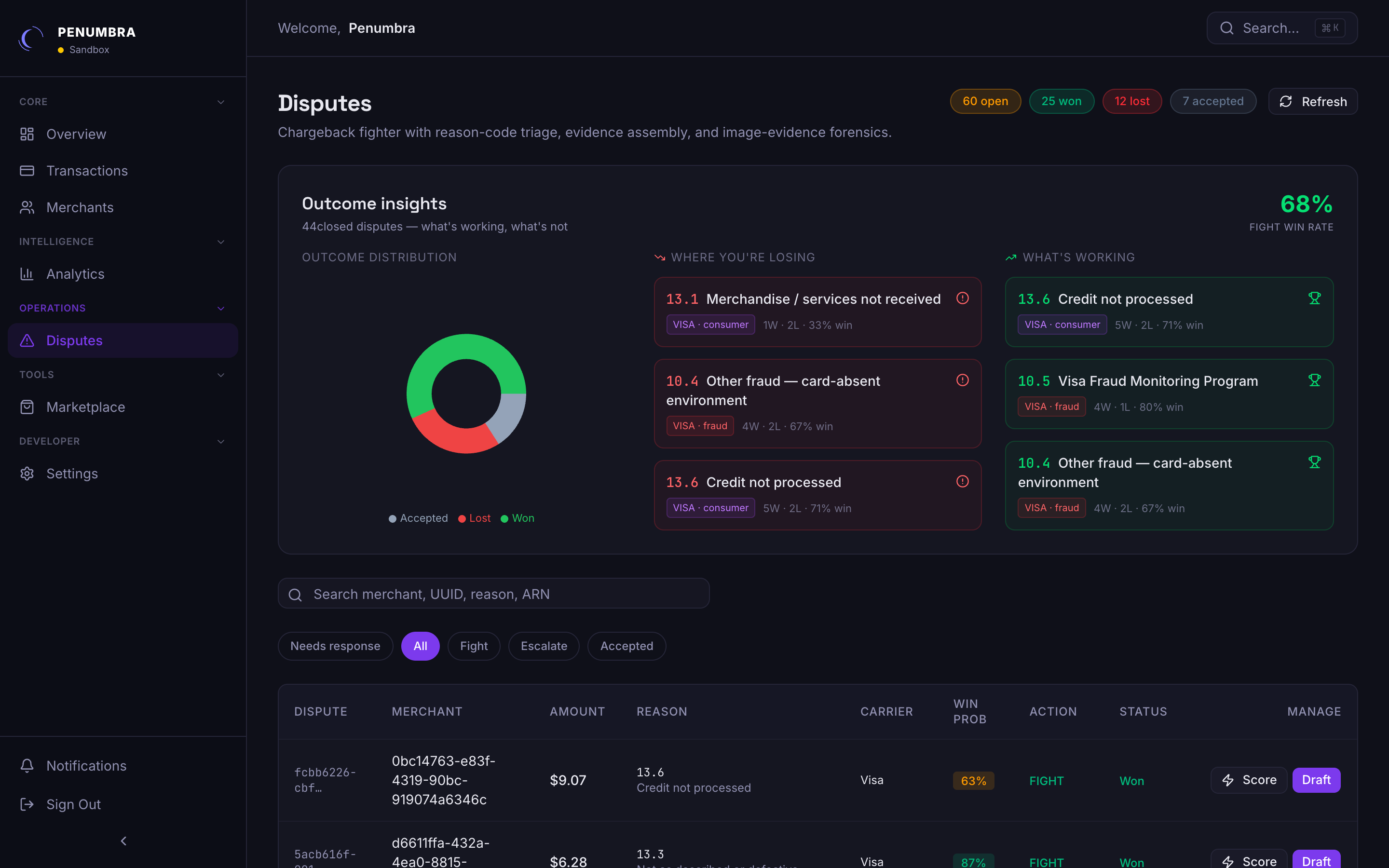
Penumbra has no dashboard to log into. It pushes every routing decision, charge, and dispute back into the CRM you already run. Shown here in our reference console.

Your numbers, synced to your CRM. Volume, revenue after refunds, approval rate, average ticket. Below: which processor is winning your traffic right now.

Every charge, every decision. Filter by processor, status, or time. Each row shows the routing decision that fired and why. No black box.

Fight chargebacks automatically. Reason-code triage, evidence assembly, rebuttal drafted. You review and submit. The hard work is already done.
The whole engine fires in parallel before a processor ever sees the transaction. You get one decision, with the reasoning attached, in milliseconds.
Merchant history, buyer signals, transaction shape. Every merchant gets a live risk score with the reasons it’s high or low.
Velocity, behavioral patterns, device fingerprinting, BIN intelligence run together. Bad charges get flagged before the processor sees them.
Every connected processor scored on approval rate, latency, cost. Winning route ships in milliseconds. When one degrades, traffic shifts.
Each charge classified for the lowest-cost tier. Level 2 and 3 data injected automatically. You pay less in fees on every transaction.
Surcharge caps, MCC verification, BSA/AML indicators. Continuous monitoring, not a quarterly audit, so violations get flagged before they hit a regulator.
Reason codes, transaction age, available evidence, historical win rates. The engine decides fight or accept and drafts the rebuttal automatically.
Volume shifts, MCC inconsistencies, refund patterns, chargeback trends. Early warning when a merchant starts behaving differently than they used to.
Multi-party revenue splits, platform-fee accounting, processor-statement reconciliation, payout forecasting. The economics layer that ties the whole money flow together.